
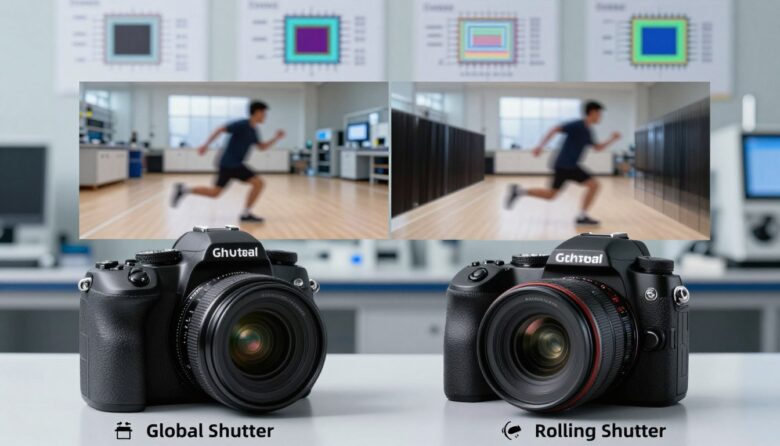
I dive into the global shutter vs rolling shutter debate to help you choose the right sensor for your work.
I write from experience with industry cameras and sensors. I have seen how the electronic shutter shapes every image and dictates processing choices.
Every high-performance sensor must balance exposure needs with limits in how data is read from the array. That trade-off affects speed, motion fidelity, and noise.
I believe this topic matters for engineers, researchers, and automation pros. My goal is to give clear, practical guidance so you can pick hardware that fits your project.
Key Takeaways
- I explain core differences between the two main electronic shutter types.
- You will learn how exposure and readout affect image quality.
- I highlight where each camera tech excels in real work scenarios.
- The guide helps choose sensors for high-speed or precision tasks.
- I offer practical tips to match sensor features to your application.
Understanding the Global Shutter vs Rolling Shutter Debate
I’ve seen how sensor readout strategies shape every capture decision in the lab and on the line.
The core debate centers on how each method times pixel exposure across the array. One approach exposes the whole frame at once, which behaves much like an interline CCD for snapshot-style capture. The other reads rows sequentially, creating a time-offset during readout.
Practical trade-offs matter: a global shutter camera option removes geometric skew when subjects move fast. That makes it a strong choice for robotics and high-speed inspection.
Cost is also a factor. Many rolling shutter cameras cost less and offer higher resolution per dollar. But they can introduce the jello effect when either the camera or target moves quickly.
“Choosing the right shutter sensors depends on whether you prioritize motion capture or lower noise and higher resolution.”
- I recommend global shutter rolling setups for precision motion work.
- For lower cost imaging and static scenes, rolling shutter cameras remain sensible.
How Rolling Shutter Sensors Capture Images
I explain how sequential readout turns time into visible form across a frame.
The Row-by-Row Readout Process
I use the term rolling shutter to describe sensors that expose rows in sequence rather than all at once. Each row starts its exposure slightly later than the one above it, so time maps down the sensor.
For example, a Zyla 5.5 offset is about 10μs per row. At 1920×1080 and 30 fps the row time is roughly 30.86μs, which directly affects how fast objects register in the final image.
Identifying the Jello Effect
Because rows are offset in time, fast motion can bend straight lines. I have seen rotating fans produce blades that look warped or bent in photos. That is the common jello effect.
“When each pixel row starts at a different moment, moving objects can appear distorted.”
Practical tip: keep object speed low or use simultaneous-exposure cameras for inspection tasks. For static document scans, sequential readout remains a cost-effective choice.
| Setup | Row Time (μs) | Expected Impact |
|---|---|---|
| Zyla 5.5 (example) | 10 per row (offset) | Minor temporal offset; noticeable at high rpm |
| 1920×1080 @ 30 fps | ~30.86 per row | Rows record visible skew on fast objects |
| Static scenes / document scan | Any | Low artifact risk; cost-friendly |
The Mechanics of Global Shutter Technology
I’ll explain how modern pixel architecture makes true snapshot capture possible in fast imaging.
Achieving Simultaneous Exposure
I rely on a brief description of how simultaneous exposure works inside a sensor. A global shutter uses an electronic shutter mechanism so every pixel begins and ends exposure at the same instant. That single instant capture removes row-by-row timing differences and prevents geometric distortion when objects move.
Key hardware detail: many high-speed cameras, such as the Andor Neo and Zyla, use the CIS 2051 with a 5T pixel design. That layout supports fast transfer and precise timing.
The transfer time from pixel to storage is extremely short—about 2μs in these designs. That speed lets a global shutter camera freeze moving objects for inspection or lab work without skew or motion artifacts.

| Feature | Specification | Benefit |
|---|---|---|
| Pixel architecture | 5T (CIS 2051) | Simultaneous exposure for each pixel |
| Transfer time | ~2μs | High-speed capture; minimal distortion |
| Applications | Industrial inspection, research | Accurate, undistorted images of moving objects |
“When every pixel shares the same exposure window, you get a true snapshot instead of a time-skewed frame.”
Key Performance Differences in Modern Imaging
Performance differences in modern imaging often come down to read noise, timing control, and how a sensor handles motion.
Read Noise and Sensitivity
Read noise sets the floor for what faint detail you can trust. I note typical numbers: a global shutter sensor measures around 2.5e- read noise, while a rolling shutter sensor of similar design sits near 1.2e-.
That gap means the rolling approach often yields higher effective sensitivity and cleaner low-light images. Yet lower noise can come at the cost of temporal integrity when objects move fast.
Synchronization Capabilities
For industrial control and multi-camera rigs, precise sync matters more than raw noise. A true global shutter gives exact temporal alignment across the entire frame.
That avoids the rolling shutter effect on fast-moving objects like a fan and makes timing-critical measurement reliable.
Frame Rate and Duty Cycle
Frame-rate trade-offs are real. Expect many global-shutter cameras to run at lower peak frame rates because each pixel needs an extra reference readout.
However, in high-speed scenes the duty cycle is often more efficient since there is no transient readout phase that distorts capture. Balancing noise, timing, and frame speed is the practical decision I make for each application.

| Metric | Typical Rolling | Typical Global |
|---|---|---|
| Read noise (e-) | ~1.2 | ~2.5 |
| Sync precision | Moderate | High |
| Frame duty | Higher peak fps | Better temporal fidelity |
Selecting the Right Shutter for Your Specific Needs
Decide by function: what you must measure and how motion, timing, and cost influence that need.
I start by listing the scene type and the object speed. If you inspect fast-moving objects, I recommend a global shutter camera for accurate, undistorted images. Its electronic shutter gives exact timing and precise sync for multi-camera rigs.
For static scenes or document scanning, I prefer rolling shutter cameras. They often offer higher resolution per dollar and lower noise, making them ideal where motion is minimal.
When you set exposure time and frame rate, check how object speed maps to row readout. If speed is low, the rolling shutter effect is small and cost savings win.
I help clients weigh performance, cost, and control so the final system fits the application. Below I summarize key trade-offs to guide your choice.
| Need | Recommended Choice | Why |
|---|---|---|
| High-speed inspection | Global shutter camera | Zero frame skew; precise sync for measurements |
| Static scanning / documents | Rolling shutter cameras | Lower cost, higher resolution, better low-light noise |
| Multi-camera timing | Global shutter cameras | Consistent exposure across all pixels for reliable data |
The Evolving Landscape of Sensor Architecture
New pixel designs are closing the gap between snapshot accuracy and low-noise capture.
I see sensor makers focus on hybrid operation so a single device can switch modes for different motion needs. Designers now pack an electronic shutter path into smaller pixels to give users more control of exposure and readout timing.
Innovations in Pixel Design
Modern pixels shorten transfer times and boost sensitivity. That reduces the rolling shutter effect even when the sensor runs in sequential readout.
At the same time, cheaper sensors gain snapshot-style timing so embedded vision systems can get precise frames without huge cost or power penalties.
“Faster pixels let cameras freeze motion more reliably while keeping noise low.”
| Trend | Impact | Benefit |
|---|---|---|
| Mode-switch pixels | Dual operation (snapshot / sequential) | Flexible choice for varied motion |
| Faster readout | Lower row time | Reduced distortion on moving objects |
| Improved sensitivity | Better light performance | Lower noise at short exposure time |
Conclusion
In short, good results start when a camera’s timing matches the real-world motion you need to capture.
I recommend choosing by function: if you inspect fast objects, a global shutter sensor gives a clean frame with no distortion. For static scenes, a rolling shutter camera often delivers lower noise and better low-light images at lower cost.
Understand how exposure and row readout map to object speed and time. That knowledge lets you pick pixels and readout modes that match your applications and light budget.
Make the choice that keeps measurements accurate and data reliable. Thank you for reading and exploring these shutter sensors with me.
FAQ
What is the main difference between a global shutter and a rolling shutter?
I explain it simply: one type exposes every pixel at the same instant, while the other exposes rows in sequence. That timing difference changes how moving objects and flashes appear in an image.
How does a rolling readout create the "jello" effect?
When rows are read at slightly different times, fast motion or vibration causes parts of the scene to be captured at different moments. I see skewed edges, wobbly lines, or partial distortions when the subject moves quickly or the camera pans fast.
Can exposure time reduce motion distortion with rolling readout sensors?
Shortening exposure helps. I use faster exposure to freeze motion in each row, which lowers visible distortion. But with very fast motion, some artifacts can still appear unless the entire frame is captured simultaneously.
Do simultaneous-exposure sensors always outperform row-by-row designs in low light?
Not always. Sensors that capture all pixels at once can suffer higher read noise or reduced sensitivity depending on pixel design. I weigh noise, dynamic range, and light efficiency for each application before choosing.
Which option is better for high-speed machine vision or robotics?
I recommend simultaneous exposure sensors for machine vision where accurate geometry and precise timing matter. They deliver cleaner frames during motion and enable reliable synchronization with triggers and strobes.
Are there trade-offs in cost and complexity between the two sensor types?
Yes. Simultaneous-exposure sensors often cost more because of advanced pixel circuitry and design challenges. I consider budget, performance needs, and integration complexity when advising clients.
How do read noise and sensitivity differ between architectures?
Row-by-row designs can be optimized for lower read noise and better dynamic range in some implementations. I test sensors for actual readout noise and quantum efficiency since spec sheets don’t tell the whole story.
Can synchronization with external lighting be improved with certain sensors?
Sensors that expose the whole frame at once make synchronization with strobes and LED lighting easier and more accurate. I prefer them when precise timing between light pulses and capture is critical.
Is frame rate always higher with rolling readout cameras?
Not necessarily. Row-by-row readouts can enable very high frame rates, but simultaneous-exposure designs also achieve high speeds with modern pixel innovations. I compare duty cycle and readout architecture for the target frame rate.
What recent pixel design innovations should I watch for?
I follow improvements like in-pixel memory, better fill factor, and low-noise amplification. These advances narrow the gap between architectures and improve performance for demanding scenes.
Which choice is best for filmmaking and creative video work?
For cinematic motion without skew or wobble, I tend to choose sensors that capture the whole frame at once or hybrid designs. Filmmakers also balance cost, dynamic range, and available lenses when deciding.
How do I decide which sensor to buy for a specific project?
I recommend defining the priorities—motion fidelity, low-light performance, synchronization needs, budget—and then testing candidate cameras under real capture scenarios. Practical tests reveal real-world strengths and weaknesses.
Can software correct rolling readout artifacts after capture?
Post-processing can mitigate some distortions, especially for predictable motion, but it can’t fully restore accurate geometry in all cases. I treat software fixes as a supplement, not a replacement for the right sensor choice.
Are there hybrid sensors that offer the best of both approaches?
Yes, some modern sensor designs combine fast, near-simultaneous exposure mechanisms with low-noise readout techniques. I keep an eye on offerings from Sony, ON Semiconductor, and other manufacturers that push these hybrid solutions.

Ryan Mercer is a camera sensor specialist and imaging technology researcher with a deep focus on CMOS and next-generation sensor design. He translates complex technical concepts into clear, practical insights, helping readers understand how sensor performance impacts image quality, dynamic range, and low-light capabilities.