

I want to unpack a smart imaging method that helps modern phones and mirrorless cameras capture clearer photos in tight spaces. This approach merges nearby sensor elements so each combined unit gathers more light.
Why I Think This Matters in Real Photography
From what I’ve seen when testing phones and compact cameras in everyday situations, low-light image quality usually depends more on how well the sensor handles limited light than on the megapixel number printed on the box. I’ve taken photos indoors, at night, and in shaded places where high-resolution modes looked impressive in theory, but the cleaner result often came from the mode that prioritized light gathering instead of maximum detail. In my experience, that is where this kind of sensor processing becomes genuinely useful, especially for people who just want a reliable photo without needing perfect conditions.
I also think it’s important to be honest about the trade-off. This does not magically turn a small sensor into a professional large-sensor camera, and it will not fix every difficult scene. What it can do is help produce brighter, smoother images with less visible noise when the light is not ideal. A practical tip I always recommend is to compare the standard photo mode with the full-resolution mode in the same scene before deciding which one you prefer. That simple habit helps you understand whether you value cleaner shadows and more stable color, or whether you need the extra detail for cropping later.
I’ve found that the best results usually come from using the camera mode that matches the light you actually have, not the one that sounds best on paper.
By trading raw resolution for brighter, cleaner images, a small sensor can mimic the performance of larger hardware. I’ll show how this helps when light is limited and why many manufacturers adopt the method for better results.
I explain this topic in plain terms so you can see why your phone often beats expectations at dusk or indoors. I use examples from everyday shooting and note how the choice affects final resolution and overall image quality.
Key Takeaways
- I explain how nearby sensor sites combine to boost light capture for cleaner photos.
- This method helps small sensors balance high resolution with physical size limits.
- Phones and mirrorless cameras use it to improve low-light performance without big lenses.
- Combining sites reduces noise and can change the final resolution of images.
- Understanding the method helps you choose settings and gear that fit your shooting style.
Understanding the Basics of Camera Sensors and Pixels
I’ll start by breaking down how each tiny photosite on a sensor gathers light and becomes part of your final shot.
The Role of Photosites
A photosite is the smallest light-catching unit on a camera sensor. Each one records brightness and color and then the processor turns those signals into an image.
Think of photosites as tiny buckets that collect photons. Bigger buckets hold more light, so they perform better in dim scenes.
Understanding Pixel Size
Manufacturers balance the number of tiny sensors against the physical size of the chip. For example, the TechNexion VCI-AR0821-CB has 2.1-micron pixels, which help with low-light capture.
By contrast, the Samsung Galaxy S23 Ultra uses 0.6-micron pixels, Google Pixel 7 Pro uses 1.2-micron pixels, and the OnePlus 11 has 1.0-micron pixels. These choices affect noise, color handling, and final resolution.
| Model | Pixel Size (microns) | Notes |
|---|---|---|
| TechNexion VCI-AR0821-CB | 2.1 | Larger pixel for improved light collection |
| TechNexion VCI-AR1335-CB | 13MP (varied pixel size) | Higher count needs advanced color filters |
| Samsung Galaxy S23 Ultra | 0.6 | Tiny pixels; benefits from sensor techniques |
| Google Pixel 7 Pro | 1.2 | Balance of detail and sensitivity |
| OnePlus 11 | 1.0 | Compact pixel packing for small sensors |
In short, the physical size and number of sensors guide how a camera manages light and detail. Learning this helps you understand why certain models rely on pixel binning techniques when pixels get too small.
What is Pixel Binning and Why Does It Matter
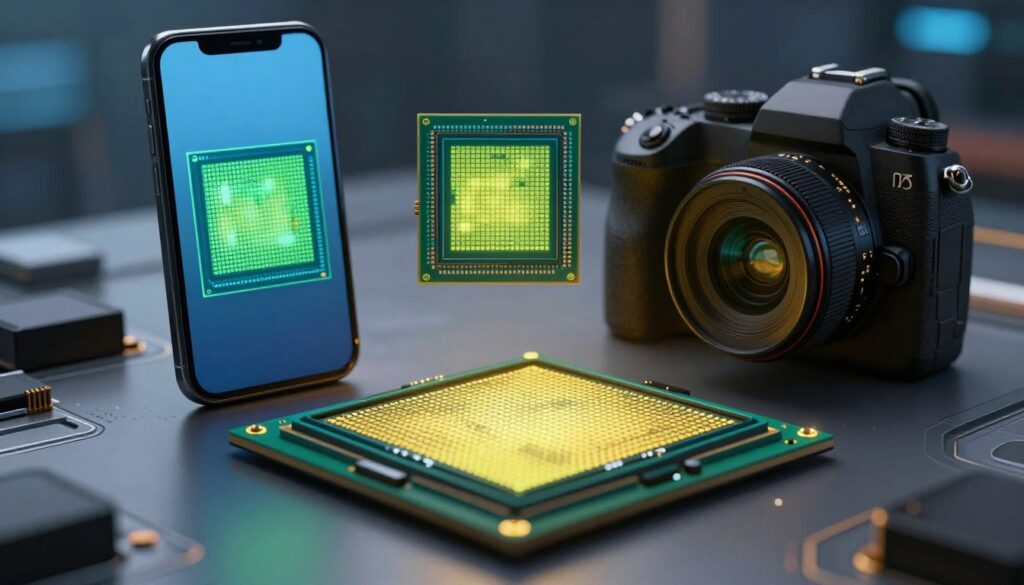
I’ll show how merging tiny sensing sites helps a phone take brighter shots when light drops.
The process combines signals from nearby sensor cells so the final image looks cleaner. When scenes get dim, this approach raises sensitivity by effectively making a larger sensing area.
Manufacturers use this method to keep slim devices while offering high megapixels during the day and better low-light performance at night.
“By merging the electric current of adjacent pixels, a camera can mimic a larger pixel and retain detail in hard conditions.”
- It improves the signal-to-noise ratio by pooling data.
- It helps small camera sensors overcome physical size limits.
- The trade keeps daytime resolution high and boosts night sensitivity.
| Benefit | How it helps | Practical result |
|---|---|---|
| Higher sensitivity | Combines nearby pixels’ data | Cleaner low-light images |
| Reduced noise | Stronger combined signal | Smoother shadows and skin tones |
| Compact design | No larger camera sensor needed | Thin phones with strong imaging |
| Flexible output | Choice of high resolution or high sensitivity | Good shots in varied conditions |
How the Binning Process Works in Modern Cameras
I’ll walk through how modern cameras group tiny sensing sites to boost light capture and cut noise.
The Quad Bayer Filter
The Quad Bayer filter arranges color elements in a 2×2 grid across the sensor. This layout lets four small sites act as one larger unit when needed.
That switch preserves dynamic range while letting the camera choose high resolution or higher sensitivity.
Combining Adjacent Pixels
Combining adjacent pixels creates a super unit that captures more light than a single tiny site. For example, 2×2 combining makes four pixels act as one.
Other modes include 3×3 (nine pixels) and 4×4 (sixteen pixels) to push sensitivity further in dim scenes.
Image Signal Processor Role
The Image Signal Processor (ISP) manages the merged data and keeps colors accurate. It balances exposure time, frame rate, and noise reduction to improve results.
“By treating multiple sites as a single sensor element, cameras produce cleaner images without bulky hardware.”
- The ISP merges signals, corrects color, and sharpens detail.
- Manufacturers use this process so smartphones offer both high-resolution shots and strong low-light performance.
Advantages of Using Binning for Image Quality
I’ll describe the clear gains that come when sensors combine their signals in low light.
Enhanced sensitivity is the biggest payoff. A binning camera such as the e-con Systems See3CAM_CU135M effectively makes a larger pixel by merging nearby sites. That lets the sensor collect more photons and improves results in dim scenes.
This method reduces noise before the processor works on the data. You get cleaner images without raising exposure time or lowering frame rate. That flexibility helps cameras perform across varied conditions.
Enhancing Low Light Sensitivity
In practice, merged pixels boost signal strength and raise sensitivity. Night photos retain tone and detail that tiny pixels alone would lose.
“By creating larger sensing units, systems can improve image quality without larger hardware.”
Practical benefits:
- Better low-light shots with less noise.
- Option to switch between full resolution and high-sensitivity modes.
- Improved dynamic range and usable data in shadows.
| Advantage | How it works | Result |
|---|---|---|
| Higher sensitivity | Combines adjacent pixels into a larger unit | Cleaner night images and stronger low-light performance |
| Noise reduction | Pooling data lowers random variation | Smoother tones and fewer artifacts |
| Operational flexibility | Switch between full resolution and merged mode | Balanced results across lighting conditions |
Limitations and Trade-offs of the Technology
I’ll outline the limits you hit when a compact sensor borrows strength from nearby sites.
One clear trade-off is that standard Quad Bayer grouping reduces output resolution by about four. That means a high-megapixel chip may deliver fewer final pixels when the camera chooses sensitivity over count.
While this process lowers noise and boosts sensitivity, it can soften fine detail. In bright scenes some users prefer full-resolution images to retain texture and sharpness.
- Color and tone can shift when the ISP reconstructs merged data, so advanced algorithms are needed to keep images natural.
- Manufacturers must balance megapixels with physical sensor size to avoid diminishing returns in performance.
- Even with smart merging, a camera with physically larger pixels usually outperforms a binned sensor in extreme low light.
- Switching modes gives flexibility, but combining four pixels still discards raw data and detail.
“This technique is a practical workaround for phones and embedded cameras that can’t fit a larger sensor.”
In short, the technique helps a phone or embedded camera in dim scenes, but it remains a compromise between sensitivity and resolution. I weigh those limits when choosing gear for tricky lighting.
Conclusion
In closing, I’ll sum up how combining sensor data balances sensitivity and detail for real-world use.
I find pixel binning a practical technology that helps a modern camera capture usable images when sensor size is limited. It trades raw resolution for better low-light performance and lower noise, while keeping color and dynamic range more stable.
It does not replace a larger sensor, but it gives smartphones and compact cameras a clear advantage. As manufacturers refine the Bayer filter and processing, I expect image quality from binned pixels to keep improving. Thanks for reading—I hope this guide helps you pick gear and settings with confidence.
FAQ
What does pixel binning do for smartphone and mirrorless cameras?
I explain how grouping adjacent sensor sites boosts light gathering to reduce noise and improve low-light images, trading raw resolution for better sensitivity and cleaner photos in dim conditions.
How do camera sensors and photosites affect image quality?
I describe that photosites collect photons and convert them to data; larger or combined sites capture more light, which raises dynamic range and lowers noise compared with tiny isolated sites.
Why does pixel size matter for performance?
I point out that bigger photosites typically capture more light per exposure, giving improved detail and less noise, while smaller sites aim for higher megapixel counts but struggle in low light.
How does the quad Bayer color filter relate to the process?
I note that the quad Bayer design groups color-filtered sites in a 2×2 pattern, enabling the sensor and processor to merge those sites into one larger effective pixel for better sensitivity.
What happens when adjacent sensor sites are combined?
I explain that signals from neighboring sites sum together, increasing the electrical output for each merged pixel, which improves signal-to-noise ratio but reduces final image resolution.
What role does the image signal processor play?
I say the processor decides whether and how to merge data, applies demosaicing and noise reduction, and balances sharpness and detail when producing the final image or a high-resolution file.
How does grouping sites help in low-light photography?
I share that combining sites raises sensitivity and yields brighter, cleaner shots at higher ISO or shorter exposures, letting you capture usable images when light is scarce.
Are there trade-offs when using this technique?
I caution that you lose pixel-level detail and true megapixel count when merging sites, and some scenes or editing needs demand native resolution rather than the cleaner, lower-res output.
When do manufacturers use merged-site modes versus full resolution?
I mention that phones and cameras often switch automatically for night or HDR modes, while offering a high-resolution option in bright light or for users who prefer maximum detail.
Can merging improve dynamic range and color accuracy?
I confirm that it often increases dynamic range and reduces color noise, since the stronger combined signal lets processing maintain highlights and shadow detail more effectively.
How does this affect file sizes and storage?
I note that lower effective resolution produces smaller files and faster processing, which helps battery life and storage management, while high-res native files take more space.
Is the technique useful for video as well as stills?
I point out that merged-site modes benefit video by reducing noise and improving low-light frame quality, and many smartphones use the approach to record cleaner footage at practical bitrates.
Will future sensors make this approach unnecessary?
I suggest that while sensor tech keeps improving, combining sites remains a practical way to balance megapixels, sensitivity, and real-world image quality, so it will stay relevant.
Which brands use this method in phones or mirrorless cameras?
I list that companies such as Apple, Samsung, Google, Sony, and Fujifilm employ sensor designs and processing that leverage grouped sites and similar techniques to improve low-light performance.
How should I choose between higher megapixels and merged-site output?
I advise choosing based on typical shooting: prefer merged-site or larger-photosite designs for low light and cleaner everyday images; choose native high megapixels if you need extreme cropping or large prints.

Ryan Mercer is a camera sensor specialist and imaging technology researcher with a deep focus on CMOS and next-generation sensor design. He translates complex technical concepts into clear, practical insights, helping readers understand how sensor performance impacts image quality, dynamic range, and low-light capabilities.