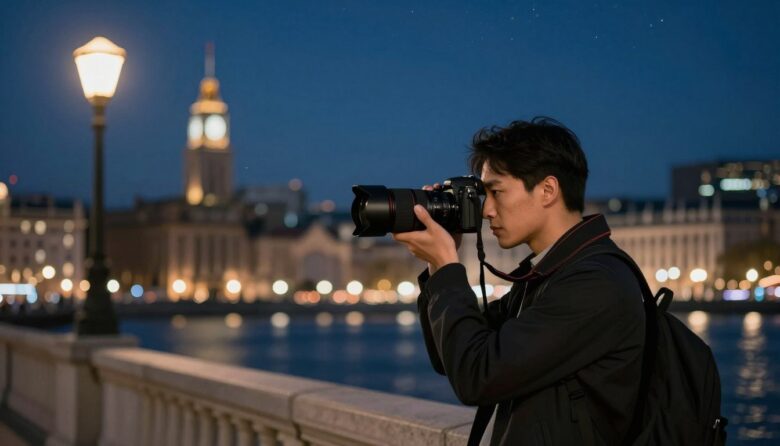
I’ll help you find the right gear for night shoots. I know how confusing choices can be, so I focus on real-world results. The Panasonic Lumix S5, a 24-megapixel full-frame camera, shows how modern systems handle dark scenes with clean images even at high ISO.
What helped me get better results in low light
From my experience, the biggest improvement in low light photography did not come from chasing the most expensive gear, but from learning how my camera behaves in real situations. I have tested night shots in streets, indoor events, and darker outdoor scenes, and I noticed that small adjustments in exposure, lens choice, and stability often made a bigger difference than upgrading a camera body too quickly. In my opinion, many people expect instant improvement from specs alone, but the truth is that good results usually come from practice, patience, and understanding the limits of your setup. One habit that has helped me a lot is taking a few test shots before committing to a scene, checking sharpness and noise carefully, and making changes on the spot instead of trying to fix everything later. That simple routine saves time, protects image quality, and leads to more reliable results without unrealistic expectations.
I learned that low light photography rewards careful choices more than quick guesses, and that honest testing in real conditions is more useful than relying only on marketing claims.
Understanding how a camera captures light is the first step to better night photos. New tech means many models now let you shoot at ISO 6400 and beyond while keeping detail and clarity. I found that balancing resolution, ISO performance, and build quality is the most practical way to choose.
The right combination of sensors and lenses defines your results. Whether you use mirrorless cameras or a DSLR, learning about ISO settings and shutter speeds makes tough lighting easier to manage. My goal is to point you to cameras that improve image quality and shooting confidence in varied conditions.
Key Takeaways
- Full-frame models like the Panasonic Lumix S5 excel in night work.
- High ISO performance and sensible resolution balance matter most.
- Right lens and shutter speeds change final image quality.
- Modern systems make low-light photography more accessible.
- I will guide you to cameras that match your budget and needs.
Understanding the Science of Low Light Photography
Night photography relies on how a device amplifies tiny amounts of light into a usable image. I focus on practical steps that let you capture clean photos when conditions are dark. Knowing the tools and settings gives you the most consistent results.
How Cameras See in the Dark
A camera uses three main tricks: raising ISO, opening the lens, and extending exposure time. Raising ISO amplifies the signal, but it can increase noise. Modern models manage high ISO far better than older gear, so ISO 6400 is often usable for clear images.
Wide apertures and long exposures bring more photons to the sensor. That lets details appear that the eye cannot see. Processing also plays a big role in reducing noise and preserving detail.
The Impact of Shutter Speed
Shutter speed controls how much light hits the sensor. Short speeds freeze motion; long speeds collect faint light. For example, a 30-second exposure can reveal the Milky Way and fine star detail.
But long shutter speeds can blur moving subjects. I balance shutter speeds with ISO and aperture to keep images sharp while minimizing noise.
| Setting | Typical Use | Trade-off | Result |
|---|---|---|---|
| High ISO (e.g., 6400) | Handheld night shots | Increased noise risk | Brighter image with more visible detail |
| Wide aperture (f/1.4–f/2.8) | Portraits, astrophotography | Shallow depth of field | More light, clearer subject separation |
| Long exposure (seconds to minutes) | Milky Way, light trails | Requires tripod; motion blur | Rich, detailed night images |
| Noise reduction (in-camera/RAW) | All night work | Potential loss of fine texture | Smoother images with less visible noise |
Why Sensor Size Matters for Night Shooters
A sensor’s physical size strongly shapes how much usable light reaches each photosite. That extra area on full-frame models usually delivers more dynamic range and better detail in deep shadows.
I find full-frame cameras perform better in dark conditions because larger photosites capture photons more efficiently. This reduces visible noise and keeps highlight roll-off smoother.
Smaller options like APS-C or Micro Four Thirds still hold their own when paired with a fast lens. A wide aperture can make up for less surface area and produce sharp images with pleasing bokeh.
- Dynamic range: larger formats retain more shadow detail.
- Noise control: bigger photosites usually mean cleaner high-ISO output.
- Price vs performance: size often affects cost, but value depends on your shooting style.
When I recommend gear, I focus on how size will affect your ability to collect light in tough conditions. Understanding that relationship is the clearest way to improve night photography results.
Evaluating the Best Low Light Camera Sensor Options
When I compare modern imaging systems, I focus on how each one controls noise and preserves detail in near-darkness.
I tested models that offer different approaches. The Panasonic Lumix S5 uses dual native ISOs for cleaner results at high ISO. Canon’s EOS R6 relies on larger photosites to hold noise in check.
The Fujifilm X-T4 with a fourth-gen X-Trans design stays usable at ISO 6400 and above. Nikon’s Z 6 II combines a BSI layout with dual processors to boost autofocus and video performance.
For rugged night shoots, the Pentax K-3 III gives you a 25.7MP APS-C format and tough weather sealing. Each body adds features such as IBIS or advanced AF that change how you shoot and the final image quality.
| Model | Key Feature | Strength | Ideal Use |
|---|---|---|---|
| Panasonic Lumix S5 | Dual native ISOs | Cleaner high ISO | Handheld night photos |
| Canon EOS R6 | 20MP, large photosites | Noise control | Portraits & events |
| Fujifilm X-T4 | X-Trans IV | Good ISO performance | Street and astrophotography |
| Nikon Z 6 II / Pentax K-3 III | BSI + processors / Weather sealed APS-C | AF, video, durability | Mixed shooting conditions |
When you evaluate options, weigh dynamic range and how each unit manages noise in near-total darkness. That approach gives the clearest path to better results.
Full Frame Versus Crop Sensor Performance
Choosing between full-frame and crop formats often comes down to how you value sensitivity versus portability.
Full-frame advantages
Full Frame Advantages
Full-frame camera bodies generally deliver better light sensitivity and cleaner results in dark scenes.
Larger photosites capture more photons, which improves dynamic range and reduces visible noise when you raise ISO.
This often gives smoother highlights and richer shadow detail for night photography and video work.
Benefits of Micro Four Thirds
Benefits of Micro Four Thirds
Micro Four Thirds systems stay compact and affordable, so I reach for them on long trips or when weight matters.
Smaller four thirds sensors can show more noise in extreme darkness, but good lenses and careful exposure cut that gap.
Interestingly, the Panasonic Lumix S5 is a full-frame option that remains surprisingly compact compared with some micro four bodies.
| Format | Primary Advantage | Typical Trade-off |
|---|---|---|
| Full-frame | Higher sensitivity, better detail in shadows | Often larger and pricier |
| Micro Four Thirds | Compact kit, more lens choices for travel | More visible noise in very dark scenes |
| Practical choice | Match lenses and technique to your needs | Both formats can deliver great images when used well |
The Role of High ISO and Noise Reduction
Pushing ISO higher lets you keep shooting handheld when darkness arrives, but it also requires smart noise control to keep your images usable.
I test gear at ISO 6400 and ISO 12800 to see how cameras handle grain and preserve detail. Modern bodies can deliver clean results at those settings, especially for commercial work.
Good iso performance gives you flexibility. It means fewer tripod setups and faster shooting during events or street photography.
Noise reduction software pairs well with a strong native ability to control noise. I use it to recover detail while smoothing grain in shadows.
- Test in real conditions: shoot a range of ISO values to find the sweet spot for your gear.
- Balance exposure: avoid underexposing then pushing ISO; that often amplifies noise.
- Preserve detail: the sensor’s performance at high ISO sets how much fine texture you can keep.
Ultimately, knowing how your equipment behaves at different sensitivity levels is the fastest path to better night photography results.
Essential Features for Night Photography Gear
Choosing gear with strong dynamic range lets you preserve both star detail and street highlights in a single exposure.
I value bodies that manage noise while keeping wide tonal latitude. That balance helps me hold shadow texture and bright points without heavy processing.
A sturdy build and weather sealing matter. I shoot in chill, windy, or damp conditions and need gear that keeps working through the night.
Dynamic Range Considerations
Check specs and real-world tests before buying. Dynamic range numbers tell you how much recoverable detail you’ll have in contrasty scenes.
- Good handling of noise at higher ISOs preserves usable images.
- Articulating screens and dual card slots speed my workflow in the field.
- Proper lighting—natural or artificial—still defines final image quality.
| Feature | Why it matters | Practical effect |
|---|---|---|
| Dynamic range | Retains highlight and shadow detail | More recoverable detail in post |
| Noise control | Cleaner high-ISO performance | Smoother images with texture preserved |
| Weather sealing | Reliability in harsh conditions | Fewer interruptions on night shoots |
Top Mirrorless Camera Picks for Dark Environments
Certain modern mirrorless models make it much simpler to pull clean detail from near-dark scenes.
Sony A7RV — my top pick for night sky work thanks to its high resolution and superb image quality. It keeps fine detail and wide dynamic range for long exposures.
Sony A7IV is a versatile choice when you need solid low light performance and strong video tools in the same body.
Panasonic Lumix S5 gives impressive iso performance at a friendly price point. I often recommend it for handheld night shooting.
Canon EOS R6 impressed me with very clean output at high iso, and the Nikon Z 6 II uses a BSI design that handles noise well in dark scenes.
Each of these mirrorless cameras was tested for real shooting conditions. I consider how they manage noise, preserve detail, and support lenses and features that improve night photography results.
Why I Recommend Specific Brands for Low Light
I recommend brands that consistently deliver strong high-ISO performance and sensible ergonomics for night work. Over years of shooting, I’ve learned that raw specs matter less than real-world results.
Panasonic Lumix earns my trust for its dual native ISO design. That tech makes a tangible difference when I need cleaner exposures without over-processing.
Sony is another brand I rely on. Their high-resolution models hold detail in long exposures and are especially good for star fields and wide astro shots.
Canon gets a nod for intuitive menus and the dependable output of its R-series. I find its workflow saves time during late-night shoots and keeps files easy to edit.
I recommend choosing a brand that supports a strong lens and accessory ecosystem. You buy more than a body when you invest—you buy mounts, glass, and tools that affect results.
In short: pick makers with proven noise control, useful features, and long-term support. My hands-on tests with these cameras show they help me capture cleaner night images more often.
Selecting the Right Lenses for Nighttime Shooting
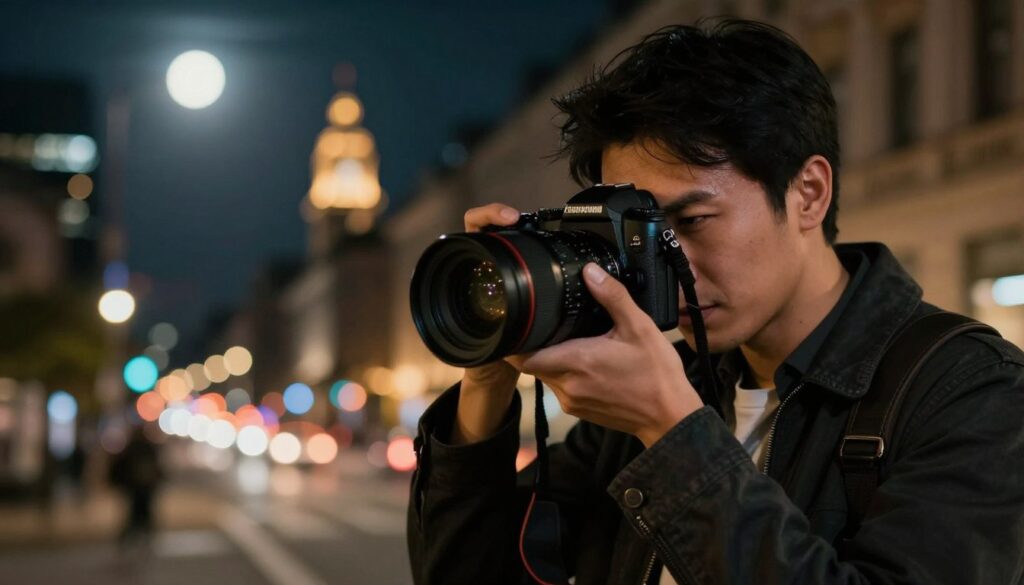
For nighttime work, lens speed and focal length shape both exposure options and composition. I focus first on glass that gathers light efficiently and holds sharpness when you push ISO or extend exposures.
Wide Aperture Benefits
Wide aperture lenses, like f/1.4 or f/2.8, let you keep ISO down and retain cleaner image quality. I use wide glass to capture stars and street scenes with less noise and better dynamic range.
Prime Versus Zoom Lenses
I prefer prime lenses for sharpness and faster apertures. Primes give excellent detail and often outperform zooms in very dark shooting.
That said, a quality zoom such as a 16-35mm f/2.8 is handy for varied night scenes. It saves time and lets me change composition quickly without swapping lens.
Focal Length Choices
Pick focal lengths for the subject: wide (14–24mm) for Milky Way and cityscapes, mid-range for portraits, and longer glass for distant subjects. I often reach for the Sony 14mm f/1.8 GM for wide astro work.
- Compatibility: ensure your lens pairs well with your camera and sensor to get optimal performance.
- Investment: high-quality lenses improve image quality more than many body upgrades.
The Importance of Tripod Stability in the Dark
A steady support is the single most important investment for clean long exposures at night. I rely on a solid platform to keep my camera rock-steady so every image shows crisp detail.
Even the slightest vibration can ruin a long exposure. That simple fact makes a tripod non-negotiable for quality night photography.
I recommend carbon fiber tripods because they are lightweight, portable, and sturdy enough to hold heavy gear without flex. Many models include a center column hook so you can add weight for extra stability in windy conditions.
Use a tripod and you can shoot at lower ISO, which improves sensor performance and yields cleaner images with more usable detail.
“A good tripod turns difficult conditions into consistent results.”
Always check the weight capacity to ensure your camera and lens are supported. A high-quality tripod makes shooting easier and more enjoyable, and you will see the difference in sharpness every time.
Using AI Software to Enhance Your Night Images
I often turn to AI noise reduction when night photos need a second chance.
AI-powered tools like Aiarty can clean noisy images without destroying fine detail. I tested several on high-ISO files and saw clear improvements in the final results.
These tools let me push ISO further while keeping usable detail. They also help salvage noisy video footage shot in dim conditions.
- Speed up post-processing and recover shadow texture.
- Complement good technique; they don’t replace solid exposure.
- Always compare the original and processed image to check retained detail.
“AI noise reduction became a reliable step in my workflow for tougher shoots.”
| Tool | Strength | When to Use |
|---|---|---|
| Aiarty | Preserves fine detail; strong noise control | High-ISO stills and night portraits |
| Topaz Video AI | Targets noisy video; motion-aware processing | Noisy clips from event or handheld shots |
| Classic denoise plugins | Quick cleanup with familiar controls | Batch work and fast edits |
Must Have Accessories for Long Exposure Work
Small accessories often make the biggest difference when you shoot long exposures at night.
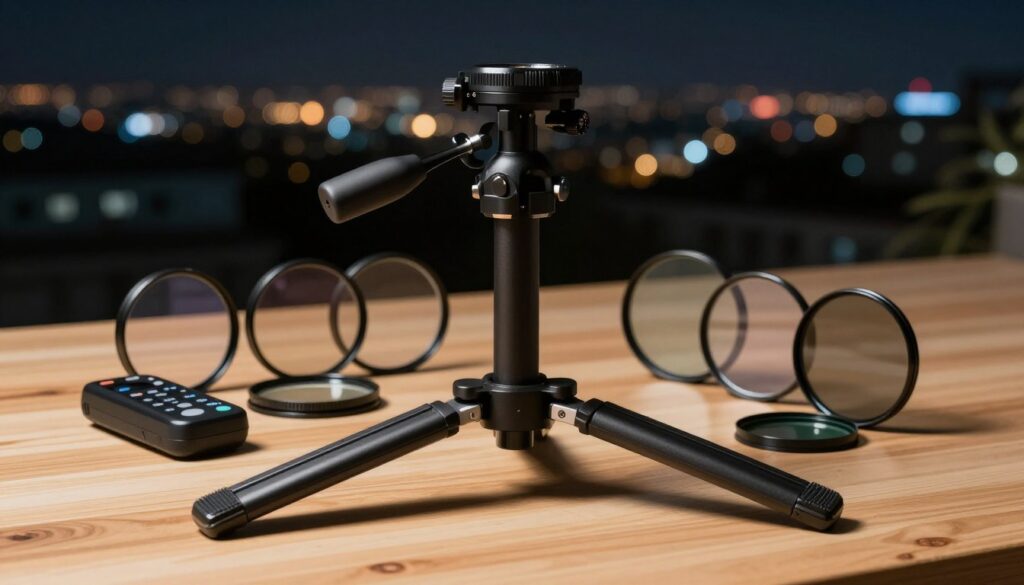
I always pack a remote shutter release. It prevents shake when you trigger the shutter and gives steadier images. A wired or wireless release also helps for timed sequences and star-tracking shots.
Extra batteries are non-negotiable. Long exposures and cold temperatures drain power fast. I swap batteries between sequences so I never lose a session to a dead pack.
External lighting expands creative options. I use compact LED panels for controlled foreground fill and a headlamp for setup. A headlamp with a red setting preserves my night vision while I adjust settings and check framing.
Filters and simple gels help too. Use pollution-reducing filters to cut orange glow in city skies. Neutral density and color gels let you shape exposure and produce more consistent results for both photos and video.
Test everything before you go. Check triggers, lights, and batteries at home. That quick run-through saves time and stress on remote shoots and keeps your workflow smooth.
| Accessory | Purpose | Practical Tip |
|---|---|---|
| Remote shutter release | Prevents shake; allows timed exposures | Choose wired for reliability or wireless for range |
| Extra batteries | Maintain power in long sessions | Store spares in an insulated pouch in cold weather |
| LED panel / headlamp | Light painting and foreground illumination | Use red mode on headlamp to keep night vision |
| Filters (light pollution, ND) | Control color cast and exposure | Test filters for color shift before critical shoots |
Balancing Budget and Performance in Your Kit
Balancing price and performance starts with prioritizing what impacts image quality most. I focus on the parts that change results the most: the sensor and a sharp lens.
I often suggest buying a solid body-and-lens combo first. That gives you reliable images and space to upgrade later.
Used gear can unlock high-end performance at a friendlier price. I regularly find bodies that still deliver strong performance for photos and video.
Many entry-level models today offer surprising night capability. Prioritize glass and how the unit handles detail before chasing specs.
| Option | Price Range | Strength | Trade-off |
|---|---|---|---|
| New entry-level kit | $600–$1,200 | Good value; modern ISO handling | Some limits on resolution and autofocus |
| Used enthusiast body | $800–$1,800 | High performance for price; robust features | No warranty; inspect shutter count |
| Invest in lens | $300–$1,500 | Improves sharpness and detail most | Higher upfront cost for fast glass |
“Start simple, upgrade thoughtfully, and let technique amplify gear value.”
Compare options, ask other photographers, and weigh long-term value. That approach finds the right balance of price and performance without overspending on gear you won’t use.
How to Master Your Camera Settings at Night
To make consistent night images, I control exposure variables instead of letting the camera decide.
Start in manual mode. Set aperture for the depth you want, pick a shutter speed that limits blur, and raise ISO only as needed. This balance is the core of good low light shooting.
Understand your camera’s dynamic range so you expose to protect highlights while keeping shadow detail. Test a few frames and review images on the LCD to confirm exposure and focus.
Practice different iso settings and shutter speeds to learn how each affects noise and motion. I use focus peaking when autofocus struggles, and a 2-second timer if I don’t have a remote.
- Manual mode: full control of exposure.
- Check results: review images and adjust on the spot.
- Use features: focus peaking and long-exposure previews help a lot.
“Mastering these settings builds confidence and better results.”
Common Mistakes to Avoid When Shooting in Low Light
A single overlooked setting can turn a crisp frame into a noisy mess. I’ve seen that happen more than once on night shoots.
Don’t trust auto modes. They often raise ISO and yield heavy noise or soft focus. I switch to manual to control exposure and keep detail where I want it.
Tripod neglect is costly. Without steady support you get blur and higher ISO, which hurts overall performance. A solid tripod saves effort and improves image sharpness.
Also check focus before long sequences. Soft images waste time and can’t always be fixed in post. Shoot RAW and apply noise reduction in editing for the best recoveries.
Battery planning matters. Cold nights and long exposures drain power fast. I keep spares warm and ready so my results don’t stop mid-session.
| Mistake | Why it matters | Quick fix |
|---|---|---|
| Relying on auto | Uncontrolled ISO and exposure cause noise | Use manual mode; set aperture/shutter/ISO |
| No tripod | Blur and forced higher ISO reduce detail | Bring a steady tripod; add weight if windy |
| Poor focus / dead battery | Soft images or halted sessions | Confirm focus; carry spare batteries |
“A short checklist before each shoot prevents the biggest errors.”
Conclusion
Mastering low-light photography means combining a suitable sensor and quality lenses with steady technique. I recommend prioritizing gear that helps you expose cleanly, then building habits that keep shots sharp and usable.
I shared camera picks and practical tips so you can improve your images and see real results. Use a tripod, carry spare batteries, and try AI noise tools to rescue tricky files.
Practice often—test settings, vary exposures, and learn what your setup does in the dark. With patience and the right tools you can capture striking images of the night sky and cityscapes.
Thank you for reading. I hope you feel ready to get out and make your own night photography results.
FAQ
What types of sensors perform best for night and astro photography?
I look for larger sensors with bigger photosites because they gather more photons per exposure. Full-frame CMOS chips typically give the cleanest results at high ISO and offer wider dynamic range. APS-C and Micro Four Thirds bodies can still excel, especially when paired with fast glass and strong in-camera noise control.
How does shutter speed affect images taken in near-dark conditions?
Shutter speed controls how much light hits the imaging array per shot. I slow the shutter for static scenes or use faster speeds with image stabilization and higher ISO for handheld work. For motion, longer exposures create blur; shorter ones freeze action. A tripod lets me use long durations without introducing camera shake.
Why does sensor size matter for night shooters?
Sensor size directly influences pixel area and light-gathering capability. Larger formats usually produce cleaner files with less noise at elevated ISO. That improves detail retention and dynamic range in shadow-heavy scenes, which matters a lot for night photography and astrophotography.
Can Micro Four Thirds systems deliver good results after sunset?
Yes. I find Micro Four Thirds bodies very capable when combined with wide-aperture lenses and careful exposure. They trade some high-ISO advantage for smaller, lighter kits and a broader selection of compact glass, making them great for travel and handheld night shooting.
How important is high ISO performance versus noise reduction?
High ISO performance and noise reduction work together. I prefer cameras that retain detail at high sensitivity and offer effective, subtle noise processing. Aggressive denoising can smear fine texture, so I balance in-camera settings with post-processing tools to preserve sharpness.
What features should I prioritize when choosing gear for night scenes?
I prioritize wide-aperture lenses, reliable autofocus in dim lighting, strong high-ISO handling, and good dynamic range. In-body image stabilization and a responsive electronic viewfinder also make shooting easier when light is scarce.
How does dynamic range impact nighttime exposures?
Dynamic range defines how well a system captures bright highlights and deep shadows in a single frame. I aim for sensors that retain color and detail in highlights like streetlights while still pulling shadow detail without excess noise. This helps with exposure latitude during post.
Which mirrorless systems stand out for dark-environment video work?
I often recommend Sony, Canon, and Panasonic mirrorless bodies for low-illumination video because of strong high-ISO performance, good codecs, and frame-rate flexibility. Panasonic Lumix models also excel with heat management and long recording times for extended night shooting.
What lenses should I pair with my body for better night results?
I go for fast primes and bright zooms. Wide-aperture primes like 24mm f/1.4, 35mm f/1.8, or 50mm f/1.2 let in more light and give cleaner images at lower ISO. Fast zooms provide flexibility for changing compositions without swapping glass in the dark.
How do prime lenses compare to zooms for evening work?
Primes typically deliver wider apertures, sharper rendering, and cleaner bokeh, which helps in low illumination. Zooms offer compositional flexibility and convenience. I choose primes when ultimate image quality matters and zooms for run-and-gun scenarios.
What focal lengths work best after sunset?
I favor wide and standard focal lengths—16–35mm for landscapes and the Milky Way, 24–50mm for environmental portraits and street scenes. Longer lenses work for isolated subjects and light trails but need faster glass or higher ISO to stay sharp handheld.
Do I always need a tripod for long exposure night shots?
For true long exposures and star photography, yes: a solid tripod is essential. It stabilizes the rig during multi-second to minute-long exposures and lets me use lower ISO and smaller apertures for maximum detail and dynamic range.
Can modern AI tools improve nighttime photos safely?
Absolutely. I use AI-based denoisers and stacking software to reduce noise while preserving detail. I apply these tools conservatively and combine them with manual edits so images remain natural and avoid over-processed artifacts.
What accessories matter most for long exposure and night work?
I pack a sturdy tripod, a remote shutter or intervalometer, extra batteries (cold drains them faster), a headlamp with a red mode, and lens cloths. Filters and a quick-release plate also speed workflow when conditions change.
How should I balance budget and performance when building a night kit?
I balance body, glass, and support gear. Invest first in a fast lens, then a capable body. Used or previous-generation bodies often offer excellent value. Allocate funds for a reliable tripod and necessary accessories—those pay off more than minor sensor upgrades.
What camera settings do I use to nail exposures after dark?
I open the aperture wide, choose the lowest ISO that retains detail without excessive noise, and set shutter speed to achieve the desired motion effect. For stars, I follow the 500/600 rule for shutter limits, and I use manual focus to ensure sharp stars or pinpoint highlights.
What common mistakes should I avoid when shooting in dim conditions?
I avoid relying solely on autofocus, underexposing to “fix” in post, and using excessive sharpening with noisy files. I also don’t ignore weather-proofing; dew and condensation can ruin glass and electronics if I’m not careful.
Which brands do I trust for nighttime performance?
I frequently mention Sony, Canon, Nikon, and Panasonic Lumix because they combine strong sensor tech, solid lenses, and useful low-light features. The right brand for you depends on preferred lenses, ergonomics, and workflow.
How does image stabilization help when there’s little available light?
Image stabilization lets me handhold at slower shutter speeds without blur, reducing the need to crank ISO. In-body stabilization paired with stabilized lenses multiplies that benefit, making near-dark handheld shooting much more practical.
Are there specific ISO settings I should stick to after dark?
I don’t use a fixed ISO number; instead I choose the lowest sensitivity that allows the shutter and aperture I need. That often means mid to high ISO values, depending on the scene and sensor capability. I test my gear to find the ISO ceiling where noise becomes unacceptable.

Ryan Mercer is a camera sensor specialist and imaging technology researcher with a deep focus on CMOS and next-generation sensor design. He translates complex technical concepts into clear, practical insights, helping readers understand how sensor performance impacts image quality, dynamic range, and low-light capabilities.